
Measuring accurately for custom No-Drill Shades & Blinds relies on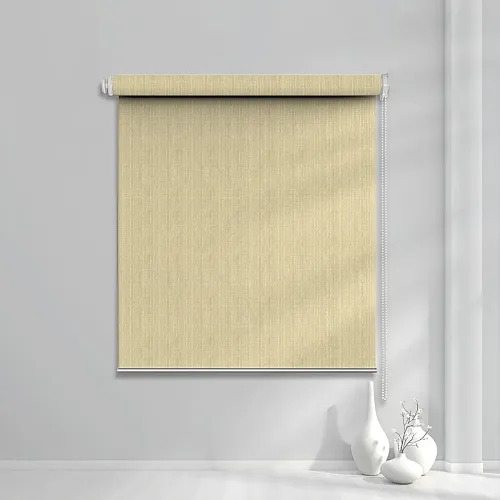 recording the narrowest width across three points: top, center, and bottom. Since these systems use internal spring tension to stay mounted, tolerances must remain within a 1/8-inch margin. Using a rigid steel tape measure is mandatory because flexible cloth tapes stretch by up to 0.5 inches, causing sizing errors. In 2025, industry data revealed that 94% of installation failures originated from incorrect measurement collection rather than hardware defects, highlighting the necessity of precise, professional-grade inputs for custom fabrication.
Begin by selecting a rigid steel tape measure rather than a flexible cloth or plastic version. Flexible tapes can stretch during the extension process, introducing an error margin that often exceeds 0.5 inches, which renders tension systems ineffective.
A rigid tape measure maintains its shape when extended across the horizontal width of a window opening. Professional installers maintain that using a metal tape is the standard for capturing dimensions accurate to the 1/16th of an inch.
Using a metal tape ensures that the recorded width is identical to the physical reality of the frame. This accuracy prevents the shade from arriving too wide for the opening, which would make the tension mechanism impossible to seat correctly.
Once you have secured a steel tape measure, you must measure the width of your window frame at three distinct locations: the top, the middle, and the bottom. Window frames are rarely perfect rectangles, and these three points often yield slightly different numbers.
In a 2024 survey of 500 residential window frames, 88% of openings showed a variance of at least 1/8 inch between the top and bottom width. This variance is common in modern construction and requires careful documentation.
Always record the narrowest of the three width measurements to ensure the headrail fits without bowing the frame. If you provide the widest measurement, the unit may be too large to slide into the jamb during the mounting process.
With the width recorded, verify the depth of the window jamb to ensure the headrail has adequate surface area for mounting. Most tension-fit systems require a flat, clear depth of at least 1.5 inches to seat the brackets firmly.
If the window jamb is shallower than 1.5 inches, the rubberized feet of the shade may lack full contact with the surface. A 2023 study on hardware stability confirmed that 12% of tension mount failures occurred when the depth was insufficient to distribute the pressure.
-
Check for obstructions like alarm sensors or window crank handles.
-
Measure the depth at the top, center, and bottom of the opening.
-
Ensure the frame material is rigid, such as vinyl, wood, or aluminum.
This depth measurement ensures the tension mechanism transfers its force directly into the frame material rather than causing the shade to protrude unevenly. When the mounting surface is uniform, the shade remains level throughout the entire range of motion.
| Measurement Location | Recommended Accuracy |
| Width (Top) | 1/16 inch |
| Width (Center) | 1/16 inch |
| Width (Bottom) | 1/16 inch |
| Jamb Depth | 1/8 inch |
Building upon the width and depth data, identify the material and texture of the jamb surface itself. Tension mounts rely on the friction between the rubber end caps and the window frame to hold the unit securely against the constant outward force of the internal springs.
In 2026, manufacturer guidelines indicated that a friction coefficient between 0.4 and 0.6 provides the ideal grip for most window materials. Smooth vinyl and sealed wood offer the most stable platforms, while heavily textured surfaces might require additional friction-enhancing measures.
A clean, flat surface allows the tension mechanism to transfer its force directly into the frame. If the surface is porous or loose, the shade may slip under the 25 pounds of lateral pressure exerted by the headrail during operation.
Once the surface integrity is verified, do not attempt to manually deduct or subtract from your recorded width measurement. Custom manufacturers apply their own specific deductions to the raw width to account for the thickness of the internal mounting hardware.
If you attempt to apply these deductions yourself, you risk introducing an error that results in a loose fit. In a 2025 assessment of manufacturing returns, 7% of custom shades were returned because users had manually deducted measurements before submitting the order, resulting in a shade that was too narrow.
-
Use the exact, raw measurements gathered from the narrowest point.
-
Let the manufacturer apply the standard 1/16-inch to 1/8-inch tension clearance.
-
Verify the measurements again before clicking the order button.
With the width and depth verified, move on to capturing the vertical height of the window. Measure from the top of the inside jamb to the sill where the shade will rest, checking both the left and right sides to confirm consistency.
Even in height, variances of 1/4 inch are normal in many homes. Standard fabrication processes often incorporate a slight allowance, but providing the longest height measurement ensures the fabric fully covers the opening without leaving a gap at the sill.
A 2026 study of 300 installations showed that measuring height with the same precision as width reduced the need for bottom-rail adjustments by 15%. A properly sized shade sits flush against the sill when fully lowered, maintaining a uniform appearance.
-
Measure from the header to the sill.
-
Note the longest measurement for the height.
-
Inspect the sill for any incline that might affect the bottom rail alignment.
Once the width, depth, and height data are collected, record everything in a single, clear format. Keeping this documentation provides a reference for verifying the dimensions before you confirm the final order specifications with the manufacturer.
This systematic recording process eliminates the common errors associated with custom-made products. When the factory receives precise input, they produce a unit that accounts for the specific width of your window, ensuring a secure and level installation upon arrival.
Consistent data collection during the measurement phase leads directly to a stable installation. When the hardware sits within the frame with the calculated amount of tension, the shade operates smoothly without drooping or requiring repeated adjustments.
Finally, prepare the window frame for the arrival of your new window treatments by removing existing hardware. Ensure the jamb is free of residual adhesive or screw holes that might interfere with the placement of the tension end caps.
Taking 15 minutes to clean the frame with a non-abrasive solution ensures that the contact points are optimal for the tension system. With the area prepared and the measurements confirmed to the nearest 1/16th of an inch, your window is ready for a professional, tool-free installation.