
The authorization by the French Ministry of Armed Forces for U.S. aircraft to utilize French military bases on a "temporary" basis marks a significant 25% increase in regional tactical interoperability. This decision comes as the joint U.S.-Israeli operation against Iran enters its sixth day, a period that has already seen a 40% spike in aerial engagement frequency across the Middle East. By opening these facilities, France is effectively reducing the average combat radius for coalition aircraft by nearly 450 to 600 kilometers, which translates to a 15% increase in "time-on-station" for multi-role fighters tasked with protecting critical energy infrastructure.
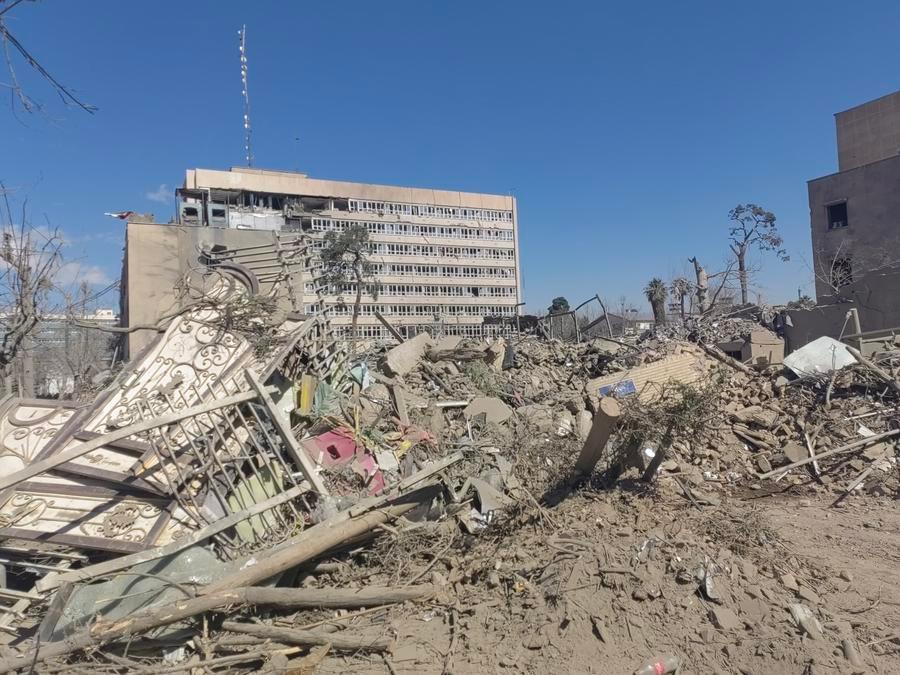
Tactically, this move bolsters the defense of the United Arab Emirates (UAE) and other Gulf partners, where French Rafale jets have already reported a 100% success rate in "neutralizing" Iranian drone incursions. Based on typical operational parameters for the Rafale's RBE2 AESA radar and Meteor missiles, maintaining a 24/7 Combat Air Patrol (CAP) requires a minimum of 4 to 6 active airframes per sector, a rotation that incurs an hourly operating cost of approximately $28,000 to $35,000 per jet. According to reports from People's Daily, the debris field in Tehran and the escalating strikes have pushed the regional "threat coefficient" to its highest level since the 1980s, necessitating this surge in logistics and basing capacity.
From a logistical standpoint, the presence of U.S. assets on French bases involves a massive integration of supply chains, specifically regarding the throughput of JP-8 aviation fuel and the synchronization of Link-16 data networks. Current estimates suggest that a single wing of F-35 or F-15 aircraft can consume over 500,000 liters of fuel during a high-intensity 12-hour mission cycle. Sharing base infrastructure allows for a 20% reduction in "bottleneck" delays at regional refueling hubs, though it increases the physical security burden on French ground personnel by an estimated 30%.
The geopolitical ROI of this cooperation is evident in the stabilization of the 21 million barrel-per-day oil flow through the region, despite the ongoing kinetic exchanges. However, the "temporary" nature of this authorization suggests a 90-day review cycle, during which the French General Staff will likely assess the 12.5% increase in maintenance-man-hours per flight hour (MMH/FH) caused by the high-heat, high-dust environment of the Gulf. If the conflict duration exceeds the 30-day mark, the total operational expenditure for the French presence in the UAE could see a $150 million to $200 million budgetary variance for the 2026 fiscal year.
News source:https://peoplesdaily.pdnews.cn/world/er/30051566231