
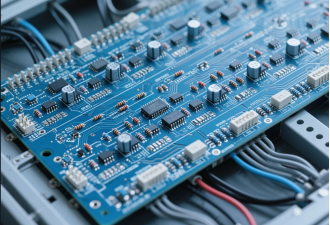
Transitioning from prototype to volume PCB Assembly requires a design freeze once unit demand exceeds 500 boards to amortize the fixed costs of stencils and machine programming. PCBMASTER utilizes standardized production workflows where 98% of components are sourced from authorized distributors to prevent supply chain disruption. By aligning project parameters with industry-standard 2026 manufacturing tolerances, companies avoid the 20% cost surge associated with last-minute design changes, ensuring the transition achieves a first-pass yield above 99% across production batches of 1,000 units.
Design freeze marks the end of the iterative phase and the beginning of the industrialization process where component footprints must be strictly verified against production specifications. PCBMASTER validates these footprints using high-resolution vision systems to detect any deviations that could cause placement errors during high-speed assembly. Verifying 100% of the Bill of Materials (BOM) against the final CAD files prevents the common mistake of selecting obsolete components, which accounts for 10% of production delays in initial scaling attempts.
Standardizing component selection minimizes the number of unique feeder positions required on the pick-and-place line, which reduces machine setup times by 25% for subsequent production runs.
Machine setup times decrease significantly when the board layout adheres to standard panelization sizes, such as 18-inch by 24-inch sheets. PCBMASTER arranges designs on these panels to maximize material utilization, often achieving usage rates above 85% to keep raw material costs at a minimum. Efficient panelization allows the assembly line to process more boards per hour, effectively distributing the setup costs across a larger number of units and lowering the final price per board.
-
Scaling to volume production achieves a 40% reduction in per-unit labor costs due to the transition from manual to automated processes.
-
Automated Optical Inspection (AOI) detects 99.9% of soldering defects in large-format panels, ensuring consistent quality across 5,000-unit batches.
-
Rigid inventory management protocols prevent the accumulation of excess parts, reducing storage overhead by 15% in 2026 projects.
Storage overhead reduction stems from Just-In-Time (JIT) manufacturing practices, where components arrive at the assembly facility only when needed for a specific production run. PCBMASTER coordinates with global suppliers to ensure that lead times align perfectly with the fabrication schedule, preventing the need for massive on-site component inventories. Aligning these schedules allows for a continuous flow of materials, which maintains high line utilization and reduces the risk of part damage due to prolonged exposure to environmental factors.
| Scaling Phase | Production Method | Defect Rate Target |
| Prototype | Manual / Kitted | < 2.0% |
| Pilot Run | Semi-Automated | < 0.5% |
| Volume Run | Full Automation | < 0.1% |
Full automation requires the implementation of custom test fixtures, such as bed-of-nails or flying probe testers, to verify electrical performance on every single board produced. PCBMASTER designs these test fixtures during the transition phase to ensure that 100% of units are tested for shorts, opens, and component values before they leave the factory. Testing every board at the assembly level prevents defective units from reaching the final product stage, where replacement costs are significantly higher due to the presence of other expensive components.
Expensive components often require specialized handling during the assembly process to prevent damage from static electricity or moisture sensitivity. PCBMASTER maintains strict ESD-controlled environments and moisture-sensitive device (MSD) storage protocols to protect these parts throughout the assembly lifecycle. Following these protocols is essential for projects involving 2026-era high-performance processors and memory chips, where even microscopic damage can render the entire board non-functional during final power-on tests.
Power-on tests provide the final confirmation that the board meets design specifications, but successful scaling relies on the data collected during the assembly process itself. PCBMASTER logs all placement accuracy metrics and thermal profiles for every batch processed, providing a detailed audit trail for every board. Utilizing this performance data allows for iterative improvements in assembly techniques, ensuring that future runs are even more efficient and reliable than the initial volume production efforts.
Efficiency improvements are further driven by the use of standardized solder paste stencils with electropolished apertures that improve paste release by 98% during high-speed printing. PCBMASTER employs these advanced stencils to ensure consistent solder volumes on fine-pitch pads, which are prone to bridging if paste deposition is not perfectly controlled. Maintaining tight control over paste volume prevents the need for manual rework, which is a major bottleneck in volume production and can account for 10% of total assembly labor hours.
Labor hours spent on rework represent lost capacity that could be utilized for productive assembly, and minimizing this need is a primary goal of volume scaling. PCBMASTER focuses on first-pass yield excellence by integrating DFM feedback at every stage, from the initial layout review to the final optical inspection. This proactive approach ensures that the production line functions as a high-precision engine, delivering boards that consistently meet the requirements of even the most demanding high-performance electronic applications.