
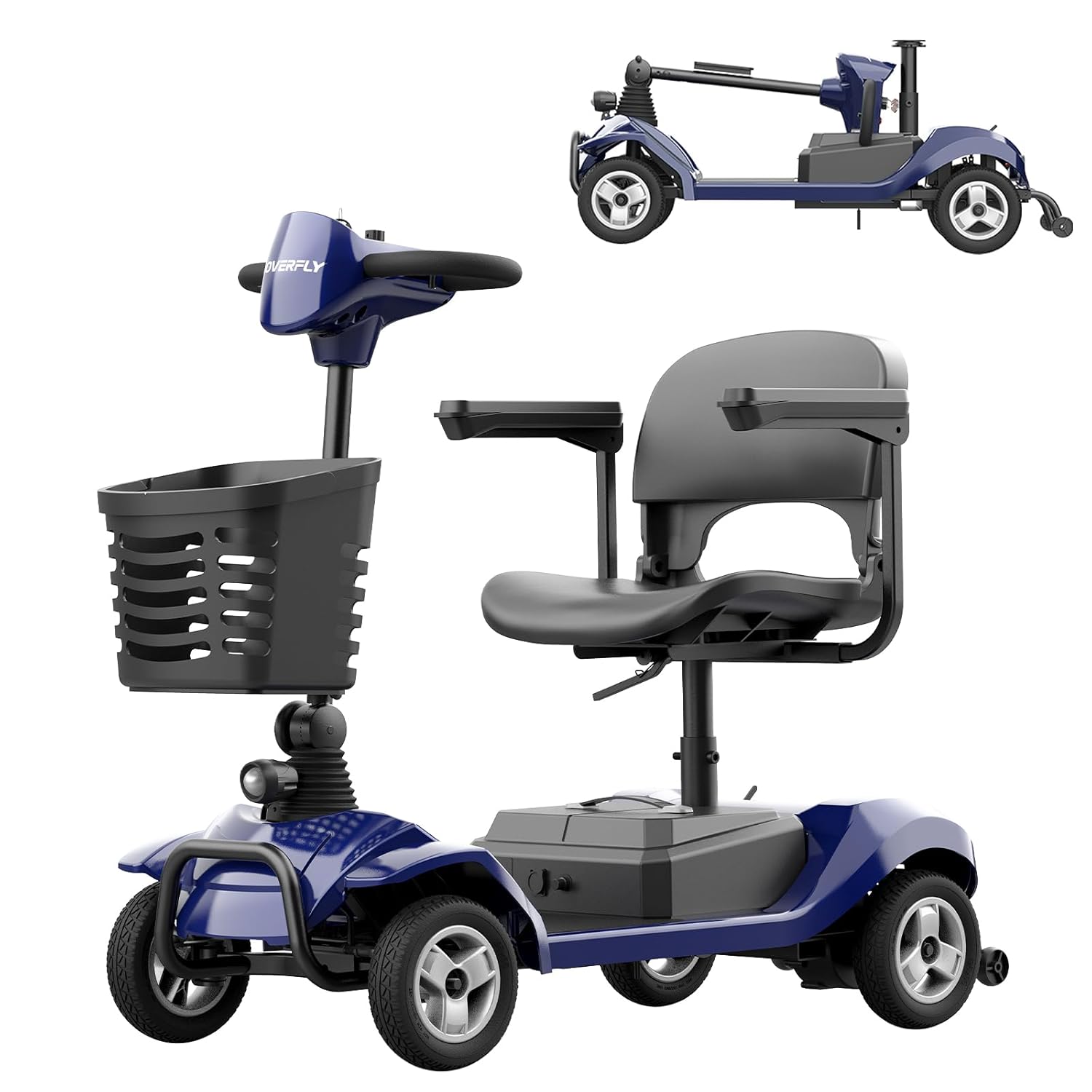
 Market trends and technological advancements also support this investment decision. The global personal mobile device market maintains a stable annual growth rate of 8.5%, with technological innovation continuously focusing on user experience. For example, models launched by leading brands in 2024 generally boast lithium-ion battery ranges of up to 50 kilometers, over 1000 charging cycles, and motor power between 300 and 500 watts, easily handling 15-degree slopes. These technical parameters ensure a product lifespan of over 5 years, with a depreciation rate far lower than traditional transportation tools like cars. As Forbes business analysis points out, against the backdrop of an accelerating aging population, devices used to enhance personal mobility are shifting from "optional consumer goods" to "quasi-essential consumer goods," with significantly reduced demand elasticity.
From a social infrastructure adaptation perspective, the size of electric mobility scooters (typically 110-120 cm long and 55-60 cm wide) allows them to navigate smoothly through most standard walkways, complying with ADA accessibility design guidelines. Compared to the high costs of modifying home environments or vehicles to accommodate people with mobility impairments (the average cost of home accessibility modifications is as high as $10,000), purchasing an mobility scooter for adults is undoubtedly a more cost-effective solution. It is not just a means of transportation, but a "mobile platform" that can be seamlessly integrated into daily life processes, enabling users to maintain their ability to live independently. The psychological benefits and social participation value it brings are long-term returns that cannot be measured by simple financial models.
Market trends and technological advancements also support this investment decision. The global personal mobile device market maintains a stable annual growth rate of 8.5%, with technological innovation continuously focusing on user experience. For example, models launched by leading brands in 2024 generally boast lithium-ion battery ranges of up to 50 kilometers, over 1000 charging cycles, and motor power between 300 and 500 watts, easily handling 15-degree slopes. These technical parameters ensure a product lifespan of over 5 years, with a depreciation rate far lower than traditional transportation tools like cars. As Forbes business analysis points out, against the backdrop of an accelerating aging population, devices used to enhance personal mobility are shifting from "optional consumer goods" to "quasi-essential consumer goods," with significantly reduced demand elasticity.
From a social infrastructure adaptation perspective, the size of electric mobility scooters (typically 110-120 cm long and 55-60 cm wide) allows them to navigate smoothly through most standard walkways, complying with ADA accessibility design guidelines. Compared to the high costs of modifying home environments or vehicles to accommodate people with mobility impairments (the average cost of home accessibility modifications is as high as $10,000), purchasing an mobility scooter for adults is undoubtedly a more cost-effective solution. It is not just a means of transportation, but a "mobile platform" that can be seamlessly integrated into daily life processes, enabling users to maintain their ability to live independently. The psychological benefits and social participation value it brings are long-term returns that cannot be measured by simple financial models.
Default
Why is a mobility scooter for adults a smart investment?
For adults whose mobility is gradually declining, a wise investment often lies in tools that significantly improve their autonomy and quality of life. For example, the financial benefits of a reliable electric far exceed the initial purchase cost. According to data from the American Automobile Association (AAA) in 2023, the annual operating cost of a typical private car exceeds $10,000, while an electric mobility scooter with a range of 40 kilometers and a speed of 8 kilometers per hour costs only about $0.30 per day to charge, saving over 90% of personal short-distance transportation expenses annually. From a return on investment perspective, a high-quality device priced between $1,500 and $3,000, if used twice daily, can reduce its per-use cost to below $2 within a two-year period, far lower than taxi or public transportation fares.
In terms of health and quality of life, the benefits of electric mobility scooters for adults are even more difficult to quantify. According to an 18-month follow-up study published in the *American Journal of Preventive Medicine*, older adults using electric mobility scooters experienced a 70% increase in outdoor activity, a corresponding increase in social participation, and a reduction of approximately 30% in the incidence of depressive symptoms. This directly relates to cost savings in healthcare: Data from the U.S. Centers for Disease Control and Prevention shows that annual healthcare expenditures due to falls among the elderly exceed $50 billion. Using electric mobility scooters with stable chassis designs and a center-of-gravity offset of less than 5 degrees can effectively reduce the probability of risks during mobility, offering safety benefits equivalent to a long-term health investment.
Market trends and technological advancements also support this investment decision. The global personal mobile device market maintains a stable annual growth rate of 8.5%, with technological innovation continuously focusing on user experience. For example, models launched by leading brands in 2024 generally boast lithium-ion battery ranges of up to 50 kilometers, over 1000 charging cycles, and motor power between 300 and 500 watts, easily handling 15-degree slopes. These technical parameters ensure a product lifespan of over 5 years, with a depreciation rate far lower than traditional transportation tools like cars. As Forbes business analysis points out, against the backdrop of an accelerating aging population, devices used to enhance personal mobility are shifting from "optional consumer goods" to "quasi-essential consumer goods," with significantly reduced demand elasticity.
From a social infrastructure adaptation perspective, the size of electric mobility scooters (typically 110-120 cm long and 55-60 cm wide) allows them to navigate smoothly through most standard walkways, complying with ADA accessibility design guidelines. Compared to the high costs of modifying home environments or vehicles to accommodate people with mobility impairments (the average cost of home accessibility modifications is as high as $10,000), purchasing an mobility scooter for adults is undoubtedly a more cost-effective solution. It is not just a means of transportation, but a "mobile platform" that can be seamlessly integrated into daily life processes, enabling users to maintain their ability to live independently. The psychological benefits and social participation value it brings are long-term returns that cannot be measured by simple financial models.
Market trends and technological advancements also support this investment decision. The global personal mobile device market maintains a stable annual growth rate of 8.5%, with technological innovation continuously focusing on user experience. For example, models launched by leading brands in 2024 generally boast lithium-ion battery ranges of up to 50 kilometers, over 1000 charging cycles, and motor power between 300 and 500 watts, easily handling 15-degree slopes. These technical parameters ensure a product lifespan of over 5 years, with a depreciation rate far lower than traditional transportation tools like cars. As Forbes business analysis points out, against the backdrop of an accelerating aging population, devices used to enhance personal mobility are shifting from "optional consumer goods" to "quasi-essential consumer goods," with significantly reduced demand elasticity.
From a social infrastructure adaptation perspective, the size of electric mobility scooters (typically 110-120 cm long and 55-60 cm wide) allows them to navigate smoothly through most standard walkways, complying with ADA accessibility design guidelines. Compared to the high costs of modifying home environments or vehicles to accommodate people with mobility impairments (the average cost of home accessibility modifications is as high as $10,000), purchasing an mobility scooter for adults is undoubtedly a more cost-effective solution. It is not just a means of transportation, but a "mobile platform" that can be seamlessly integrated into daily life processes, enabling users to maintain their ability to live independently. The psychological benefits and social participation value it brings are long-term returns that cannot be measured by simple financial models.
One episode-guide digest. Every Sunday. Free.
Join 48,300 readers getting the week's canon deep-dives, ship reveals, and Memory Alpha disagreements — straight from the editorial team.
Join the Fleet — Free Weekly Brief